Retinal Purging: How Long It Lasts and How to Tell It Apart From Irritation
Retinal purging usually lasts four to six weeks, with a clear settling trend by week eight. It appears as temporary breakouts in areas where you already tend to spot, often without persistent burning or swelling. Irritation looks different: skin feels sore, stings, burns, becomes unusually dry or flaky, or develops redness in new areas. Pause retinal if these irritation signs appear. Keep your routine simple, use retinal only at night, and introduce it gradually.
How long does retinal purging last?
Retinal purging commonly lasts four to six weeks after introducing a retinal product or increasing how often you use it. During this period, blemishes can seem more frequent before the complexion settles. A genuine purge shows a steady pattern: breakouts begin early in the routine, occur in your usual blemish-prone areas, and become less frequent over time. By week eight, the pattern should be clearly improving rather than escalating. If spots continue to spread, become increasingly inflamed, or show no sign of settling after eight weeks, do not label the reaction as purging. Review the whole routine and stop using the product that is causing discomfort. A slow introduction gives you the clearest view of how your skin responds and avoids confusing an overloaded routine with a temporary adjustment period.
The key signs that it is purging, not irritation
Purging is primarily about breakouts. You might notice small spots, closed bumps or blemishes appearing in the places you normally experience congestion, such as the chin, forehead or jawline. The skin can otherwise feel comfortable, and the breakout pattern gradually settles. Irritation has a broader set of warning signs. Look for stinging when applying products, lasting tightness, heat, marked redness, itchiness, peeling, rough patches or sensitivity across areas that do not usually break out. Irritation can also cause a sudden rash-like pattern rather than familiar individual blemishes. These signs require a pause, not persistence. Continuing through painful or visibly inflamed skin does not make a routine more effective. The useful distinction is simple: purging is temporary blemishing in familiar zones; irritation is discomfort and disruption that spreads beyond your usual breakout pattern.
Why irritation is often mistaken for a purge
The term purging is often used to explain any negative change after starting a new active. That creates a risk of overlooking irritation. A breakout and an irritated complexion can happen at the same time, particularly when several strong products are introduced together. The timing alone does not settle the question. Instead, assess location, sensation and direction. Familiar blemish-prone zones, no persistent sting and gradual improvement point towards purging. New areas of redness, burning, pronounced flaking and worsening discomfort point towards irritation. Product combinations can also make the picture harder to read. Avoid changing several steps at once, because you will not know which one is responsible. Keep a short record of application nights, visible changes and sensations. This makes it easier to identify whether the skin is settling or whether the routine needs to be simplified.
How to introduce retinal with less disruption
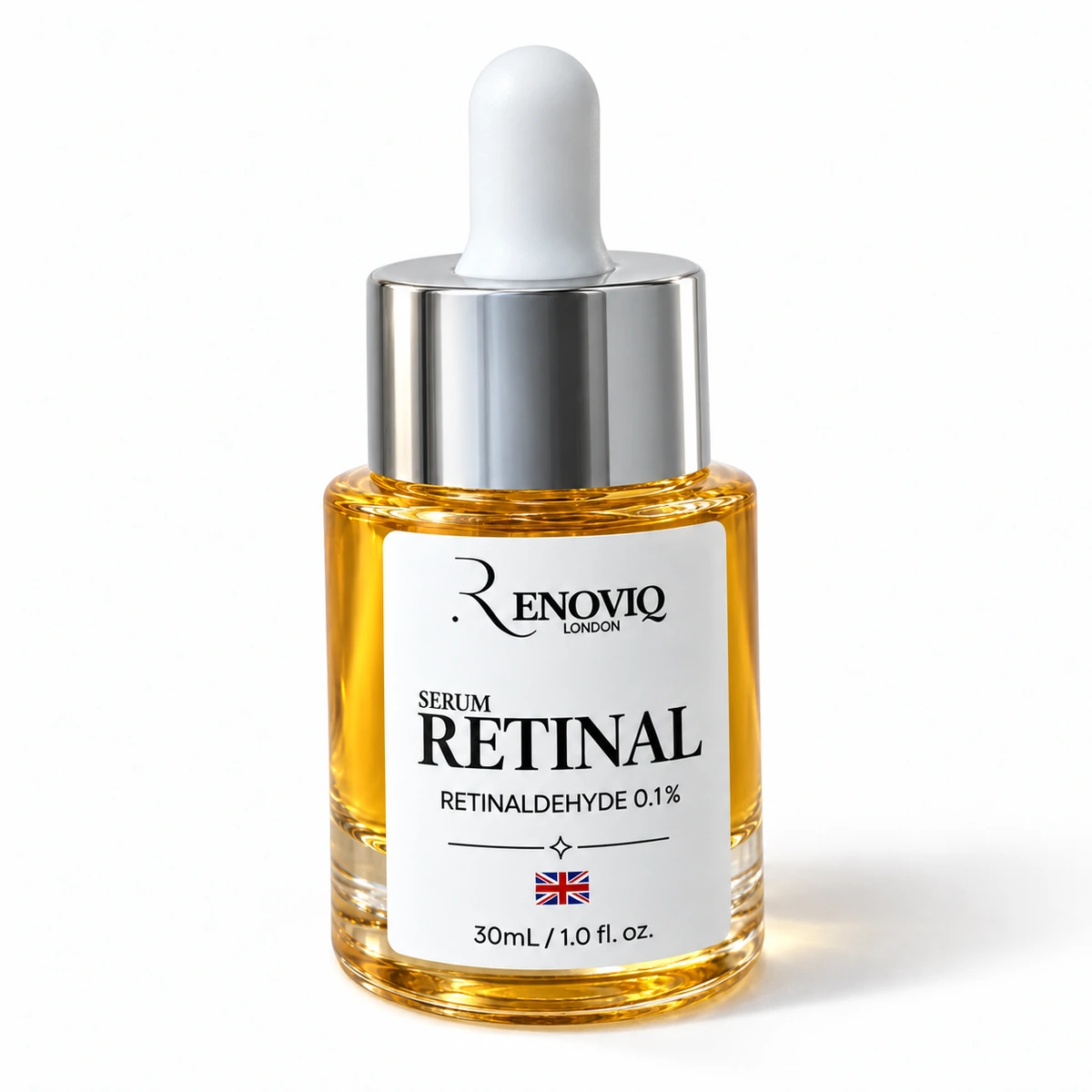
Start with a simple evening routine and introduce retinal gradually rather than applying it every night from day one. Use a small amount on clean, dry skin, then follow with a moisturiser that feels comfortable for your skin. Keep other potentially intense exfoliating steps out of the same evening while you establish tolerance. In the daytime, use broad-spectrum sunscreen as part of your regular routine. If your skin feels comfortable after several applications, build frequency slowly. If it stings, burns or becomes persistently red, pause rather than pushing through. Renoviq London RETINAL — Overnight Renewal Serum contains 0.1% retinaldehyde and is designed for PM use. Treat it as one focused active within your routine, not as a reason to add multiple new products at once. A measured approach makes both irritation and progress easier to assess.
When to stop and seek professional advice
Stop using retinal immediately if you experience intense burning, swelling, a rash, cracking, weeping skin or severe discomfort. These are not signs to work through. Keep the routine gentle while the skin returns to comfort, avoiding exfoliants, scrubs and fragranced products that cause further sting. Seek advice from a pharmacist, GP or dermatologist if symptoms are severe, persistent or recurrent. Professional guidance is also appropriate when breakouts are painful, leave visible marks, or continue worsening beyond the expected adjustment window. Retinal is not the right step to continue during an active irritation episode. Once the skin feels settled, reassess whether to restart at a lower frequency or choose a simpler routine. The goal is a routine that remains comfortable and consistent, rather than one that creates ongoing visible redness or sensitivity.
FAQ
Can retinal purging start straight away?
Yes. A purge can begin within the first days or weeks of introducing retinal, especially when you move from infrequent use to a more regular schedule. The important factor is not simply how quickly spots appear, but how they behave. Purging stays focused in your usual breakout areas and starts to settle within four to six weeks. Burning, persistent redness or widespread flaking indicate irritation instead.
Should I use retinal every night during purging?
No. More frequent use is not the answer to a difficult adjustment period. Introduce retinal gradually and increase frequency only when your skin remains comfortable. If blemishes are accompanied by stinging, tightness, redness or peeling, pause use and simplify your routine. A consistent, comfortable schedule is more useful than forcing nightly application while the skin looks and feels irritated.
Can I use exfoliating acids while using retinal?
Keep exfoliating acids separate while you are introducing retinal. Starting both at once makes irritation more likely and makes it difficult to identify what is causing a reaction. Establish a comfortable retinal schedule first. If you later add an exfoliating product, use it on a different evening and monitor for dryness, stinging or redness. Do not combine multiple intensive steps when your skin feels unsettled.
Is Renoviq RETINAL suitable for morning use?
No. Renoviq London RETINAL — Overnight Renewal Serum is specified for PM use. It contains 0.1% retinaldehyde in a 30 ml serum. Use it as an evening step and keep the rest of the routine straightforward while you assess your skin’s comfort. During the day, include broad-spectrum sunscreen in your regular skincare routine, particularly when using a retinal product at night.