How to Start Using Retinaldehyde Without Irritating Your Skin
Start retinaldehyde two evenings a week, with at least two rest nights between applications. Apply a small amount to clean, fully dry skin, then follow with a plain moisturiser. Keep the rest of your evening routine simple and do not combine retinaldehyde with exfoliating acids or other strong actives on the same night. Increase to every other night only when skin feels comfortable. Use broad-spectrum SPF every morning, and pause use if you experience persistent stinging, marked redness, swelling or peeling.
Begin with two nights a week
A measured schedule is the most reliable way to introduce retinaldehyde comfortably. Use it on two non-consecutive evenings each week for the first two weeks, such as Monday and Thursday. This gives your skin regular recovery time and makes it easier to identify whether dryness or sensitivity is developing. Apply only a small amount: more product does not create a better routine and can make discomfort more likely. Once your skin feels settled, move to every other evening. Keep that frequency for several weeks before considering more regular use. There is no need to rush daily application. Retinaldehyde works best as a consistent part of a long-term evening routine, not as an intensive short-term challenge. Record your application nights in a calendar if needed, particularly when you are also building a new moisturising routine.
Apply retinaldehyde to fully dry skin
Cleanse in the evening with a gentle product, pat your face dry and wait until your skin is completely dry before applying retinaldehyde. Applying it to damp skin can make the experience feel more intense, so this short pause is a useful step for beginners. Use a small, even layer across the face, avoiding the eyelids, lips, corners of the nose and any areas that are already irritated. Follow with a straightforward moisturiser to support a comfortable finish. If your skin is particularly dry, use the moisturiser-buffer method: apply moisturiser first, add retinaldehyde after it has settled, then add another light layer of moisturiser. This approach keeps the routine simple while allowing you to introduce the active gradually. Do not apply retinaldehyde over broken, sore or visibly irritated skin.
Keep other strong evening actives separate
Your first retinaldehyde routine should be deliberately uncomplicated. On retinal nights, avoid exfoliating acids, scrubs, peeling pads and other high-strength active products. Combining several intensive steps at once makes it difficult to know which product is causing discomfort and can leave skin feeling dry or tight. Reserve exfoliation for a separate evening, preferably on a night when you are not using retinaldehyde. Focus instead on cleansing, retinaldehyde and moisturiser. A gentle, consistent routine is easier to maintain and gives you a clearer view of how your skin responds. Do not introduce several new products in the same week. Start one product, establish a comfortable pattern, then make changes gradually. This matters especially when you are new to retinaldehyde, because your skin needs a predictable routine rather than frequent adjustments.
Choose a dedicated overnight serum
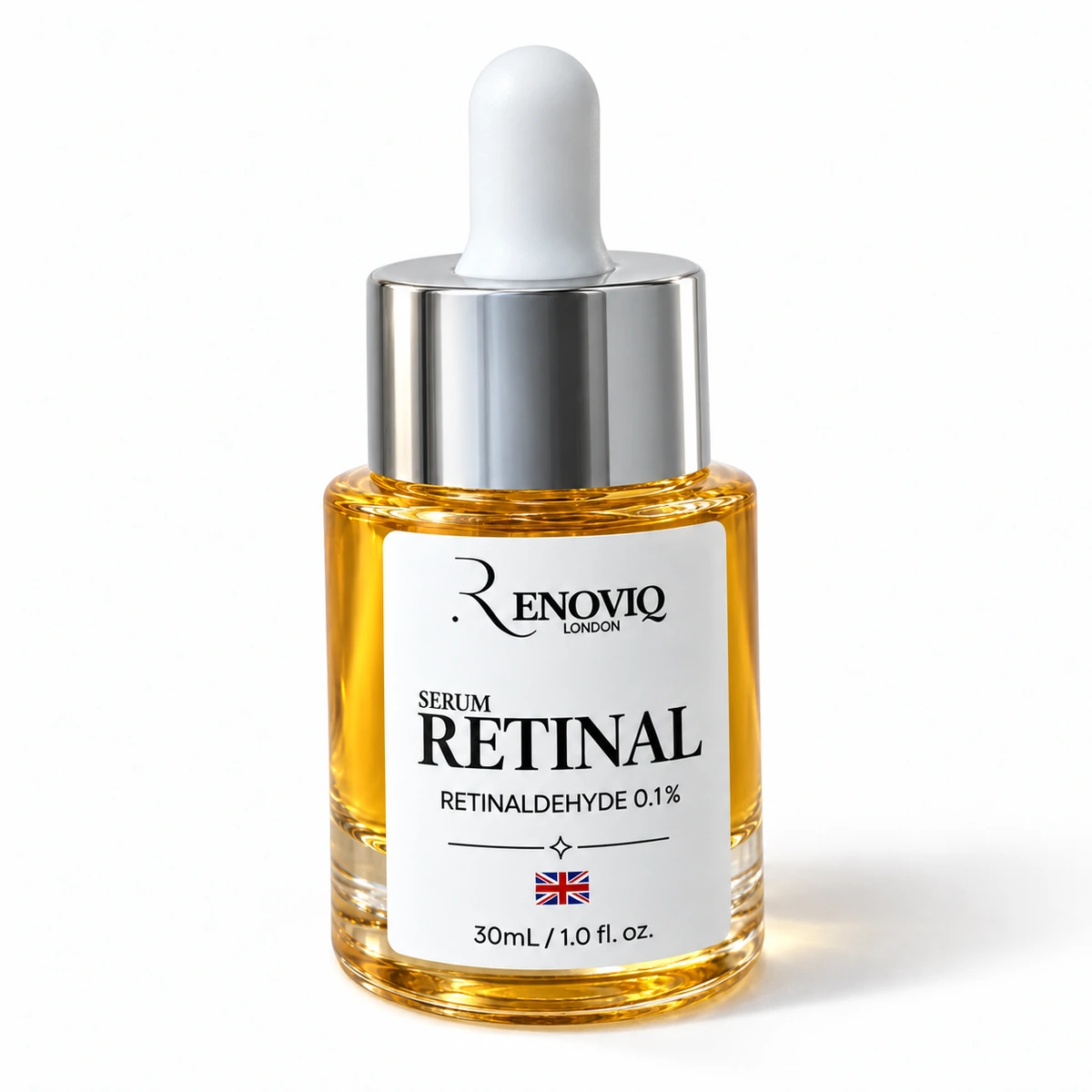
Renoviq London RETINAL — Overnight Renewal Serum is a 0.1% retinaldehyde serum designed for PM use. Introduce it with the same gradual approach: two non-consecutive evenings weekly, a small amount on fully dry skin and a plain moisturiser afterwards. Its 30 ml format fits neatly into a focused evening routine without adding unnecessary steps. Keep mornings separate from retinal use by cleansing gently, moisturising and applying broad-spectrum SPF. Daytime sun protection is an essential part of a retinaldehyde routine, including on cloudy days and through winter. It supports a polished-looking skincare routine and helps you maintain a consistent approach. At £72, the serum is also available as a single-active option for people who prefer to keep their evening routine clear and easy to track.
Know when to pause and reset
A little temporary dryness can be a sign that your routine needs more spacing, not that you need to stop all skincare. Reduce retinaldehyde use back to once or twice weekly, use a gentle cleanser and prioritise moisturiser until your skin feels comfortable again. Persistent burning, marked redness, swelling, cracking or significant peeling are signs to stop using the product and seek advice from a pharmacist, GP or dermatologist. Do not try to push through severe discomfort. Patch testing is also a sensible first step: apply a small amount to a discreet area and observe the skin before using the product across your face. Introduce retinaldehyde when your routine is otherwise stable, rather than during a period of irritation or after adding multiple new products. A slower start creates a more comfortable, dependable routine.
FAQ
How often should I use retinaldehyde when I first start?
Use retinaldehyde two non-consecutive evenings a week for the first two weeks. If your skin feels comfortable, increase to every other night and keep that pattern for several weeks. Do not rush to nightly use. A steady, low-frequency introduction is easier to maintain and gives you time to spot dryness or sensitivity before it becomes more noticeable.
Can I use retinaldehyde with exfoliating acids?
Keep exfoliating acids and retinaldehyde on separate evenings when you are starting out. Use retinaldehyde with a gentle cleanser and moisturiser only, then schedule acids for a different night. This keeps your routine easier to follow and reduces the chance of dryness, tightness or visible irritation from using several intensive products together.
Should I apply moisturiser before or after retinaldehyde?
Apply retinaldehyde to clean, fully dry skin and follow with moisturiser as the standard method. For dry or easily irritated skin, use moisturiser before retinaldehyde and add another light layer afterwards. This moisturiser-buffer approach creates a gentler introduction while you establish how often your skin feels comfortable using the product.
Why do I need SPF when using retinaldehyde?
Use broad-spectrum SPF every morning when retinaldehyde is part of your routine. Retinaldehyde is used in the evening, but daytime sun protection remains an essential daily skincare step. Apply SPF after your morning moisturiser and reapply according to the product directions, particularly when spending time outdoors or near strong daylight.