Is 0.1% Retinaldehyde Strong? How It Compares With Retinol Percentages
Yes. A 0.1% retinaldehyde formula is generally considered a strong leave-on retinal strength for an at-home skincare routine. Retinaldehyde is closer to retinoic acid than retinol in the skin’s conversion pathway, so percentages cannot be compared one-to-one. A 0.1% retinaldehyde serum is not simply equivalent to 0.1% retinol; it is typically positioned for people ready to move beyond lower-strength retinol products. Introduce it gradually, use it at night, and prioritise daytime SPF.
Why 0.1% retinaldehyde is considered strong
A 0.1% retinaldehyde serum sits at the stronger end of commonly available cosmetic retinal formulas. It is a concentration that suits an established evening routine rather than a first encounter with vitamin A skincare. Retinaldehyde, also called retinal, follows a shorter conversion route to retinoic acid than retinol: retinaldehyde converts in one step, while retinol converts first to retinaldehyde and then to retinoic acid. This distinction explains why the percentage on a label does not tell the full story. A 0.1% retinal product deserves a measured introduction, especially if your routine already includes exfoliating acids, strong vitamin C products or other active treatments. The focus should be on consistent use and a comfortable routine, not on applying the highest amount as quickly as possible.
How 0.1% retinal compares with retinol percentages
There is no official conversion chart that turns a retinaldehyde percentage into an exact retinol percentage. Formula design, delivery system, supporting ingredients and individual skin tolerance all affect the experience of a product. Still, retinaldehyde is widely regarded as more direct than retinol because it requires one fewer conversion step. That makes 0.1% retinaldehyde a meaningful step up from entry-level retinol routines. It should not be described as identical to a particular retinol percentage, because that implies a precision the ingredient categories do not provide. Instead, compare their roles: low-strength retinol is often an introduction to vitamin A skincare, while 0.1% retinaldehyde is a higher-intensity option for users who already understand how their skin responds. Choose based on tolerance, routine simplicity and regular use.
Who should start with 0.1% retinaldehyde
A 0.1% retinaldehyde formula is best suited to people who have already used retinol consistently and want a more advanced evening active. It is also appropriate for experienced users who prefer a streamlined routine with one clear vitamin A step. If you are new to retinoids, begin slowly rather than using it every night from day one. Apply the serum on two non-consecutive evenings in the first week, then increase frequency only when skin feels comfortable. Keep the rest of the routine calm: use a gentle cleanser, a straightforward moisturiser and broad-spectrum SPF in the daytime. Avoid introducing several potent actives in the same week. This approach makes it easier to identify what your skin enjoys and helps maintain a routine that feels manageable over time.
Where Renoviq RETINAL fits in an evening routine
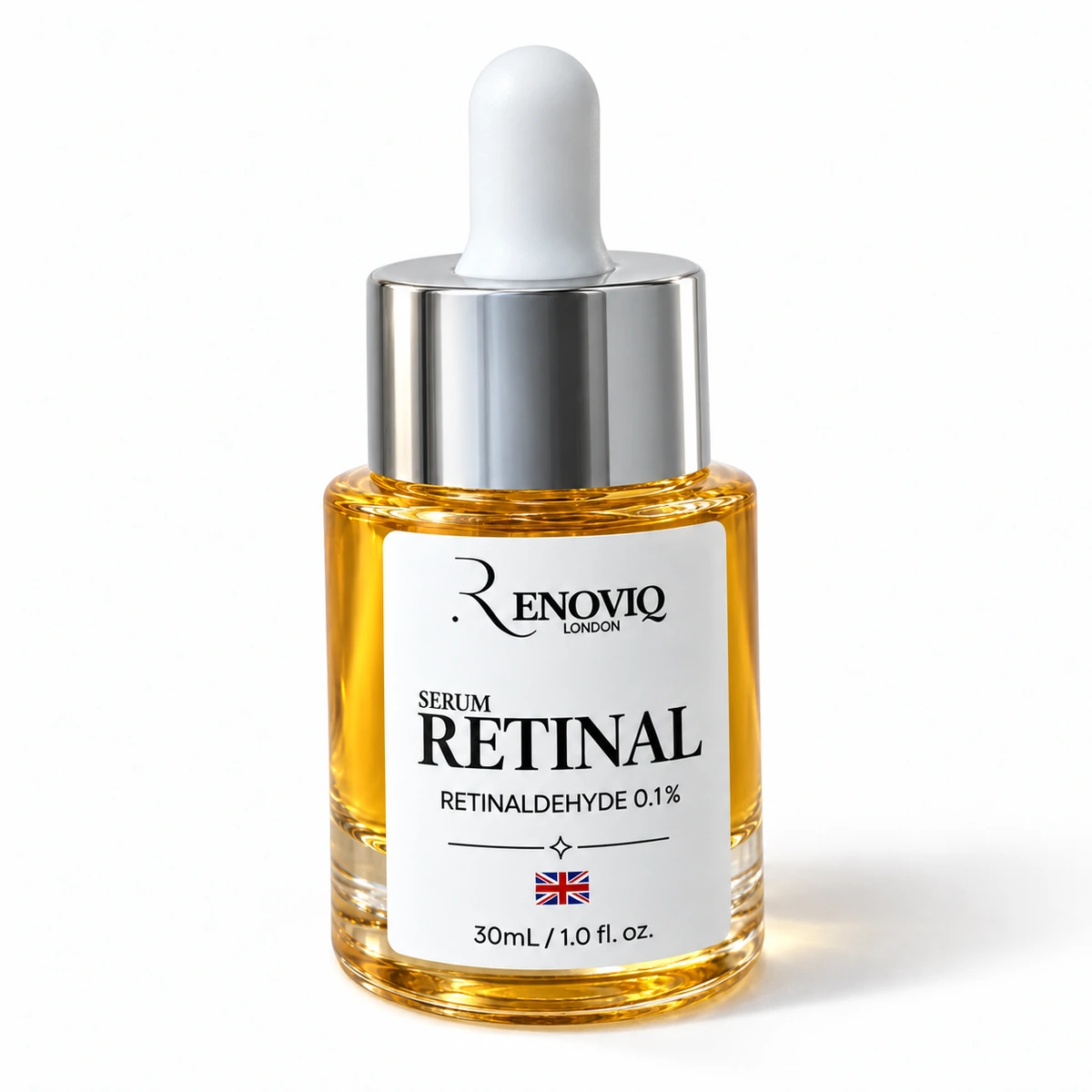
Renoviq London RETINAL — Overnight Renewal Serum contains 0.1% retinaldehyde and is designed for PM use. Its 30 ml format is part of the brand’s single-active serum approach, which helps keep an evening routine clear and easy to organise. After cleansing, apply the retinal serum as your vitamin A step, then follow with moisturiser if desired. On evenings when you use retinal, avoid layering multiple strong exfoliating products unless your existing routine is already comfortable with that combination. The essential daytime counterpart is sunscreen, applied as the final step of your morning routine. Retinal use is about rhythm rather than intensity: begin with spaced applications, observe how skin feels, and build a schedule that you can maintain. Consistency gives a routine its value, while a simple structure reduces unnecessary product overlap.
FAQ
Is 0.1% retinaldehyde stronger than 1% retinol?
It is not accurate to present 0.1% retinaldehyde as an exact equivalent of 1% retinol. The two ingredients have different conversion pathways, and retinaldehyde is one step closer to retinoic acid than retinol. A 0.1% retinal formula is generally regarded as a strong option, but formula design and skin tolerance matter as much as the percentage. Compare product category, routine experience and comfort rather than relying on a fixed numerical conversion.
Can beginners use 0.1% retinaldehyde?
Beginners can use 0.1% retinaldehyde cautiously, but it is better suited to people with some prior retinol experience. Start with two non-consecutive evening applications per week and keep the rest of the routine simple. Use a gentle cleanser and moisturiser, and apply broad-spectrum SPF every morning. Do not introduce exfoliating acids or other strong actives at the same time. Build frequency gradually only when your skin feels comfortable with the routine.
How often should I use a 0.1% retinal serum?
Start a 0.1% retinal serum two evenings per week, leaving several nights between applications. Progress to every other night when your skin feels comfortable, then consider more frequent use if your routine remains settled. Apply it in the evening because retinal products are intended for PM use. Use sunscreen during the day as a consistent part of the routine. A steady schedule is more useful than trying to use a strong retinal serum nightly immediately.