How PDRN Signals in Skin: The A2A Receptor Explained Simply
PDRN is a mixture of polynucleotide fragments. In skin biology, these fragments are linked to adenosine signalling: as they are broken down, they contribute purine building blocks that interact with adenosine A2A receptors. Think of the A2A receptor as a message receiver on a cell. When it receives an adenosine-related signal, it triggers internal communication involved in the skin’s normal response and maintenance processes. This explains why PDRN is widely discussed in regenerative-skincare science, although a receptor pathway is not the same as a guaranteed visible result from a cosmetic product.
What PDRN is, in simple terms
PDRN stands for polynucleotides, which are short fragments built from the same basic components found in DNA. In skincare discussions, PDRN is often described as a signalling-focused ingredient because its fragments connect with pathways that cells already use to communicate. The important point is that PDRN is not a single message that switches skin from one state to another. It is material that enters a wider biological environment, where enzymes break down nucleotide fragments and make their components available for normal cellular processes. One pathway associated with this process involves adenosine, a naturally occurring signalling molecule. Adenosine works by binding to receptors on cell surfaces. These receptors act like dedicated receivers: each one recognises particular signals and passes information into the cell. The A2A receptor is one of the most relevant receptors in explanations of how PDRN-related signalling is understood.
The A2A receptor: a cell’s message receiver
An A2A receptor is a protein located on the surface of certain cells. Its job is to recognise adenosine-related signals outside the cell and translate them into activity inside the cell. It does not physically pull a message into the cell. Instead, when the right molecule binds to it, the receptor changes shape and starts a chain of internal signals. This is comparable to pressing a doorbell: the button remains outside, while the sound happens inside the house. A2A signalling is commonly linked with cyclic AMP, often shortened to cAMP. cAMP is a messenger that helps cells organise and pass on instructions. In skin science, the A2A receptor matters because it is part of normal communication between cells and their surroundings. PDRN is discussed in relation to this receptor because its breakdown products support adenosine-related signalling rather than because PDRN itself acts as a simple, direct on-off switch.
How the PDRN-to-A2A pathway is described
The simplified pathway starts with polynucleotide fragments. Enzymatic processes break these fragments into smaller components, including nucleotides and nucleosides. Adenosine-related molecules can then interact with adenosine receptors, including A2A receptors, where the right receptor and signalling conditions are present. Once A2A is activated, it initiates intracellular signalling involving cAMP and further molecular messengers. This sequence is why descriptions of PDRN often use the word signalling. It refers to a chain of recognition and response, not a visible skin change happening instantly on the surface. The pathway is also context-dependent. Cell type, receptor availability and the surrounding skin environment all shape cellular communication. For cosmetic readers, the useful takeaway is simple: PDRN belongs to a category of ingredients valued for its connection to established skin-signalling discussions, particularly those involving adenosine receptors and the A2A pathway.
What this mechanism means for skincare expectations
A receptor explanation gives context for an ingredient; it does not replace a sensible skincare routine or predict the exact appearance of every person’s skin. Cosmetic formulas are assessed through their finished format, use pattern and how they sit within a routine, while receptor biology describes activity at a cellular level. Those are related subjects, but they are not interchangeable. It is therefore best to treat A2A signalling as the scientific background behind PDRN conversations rather than as a promise of a particular outcome. Consistent application, a routine that suits your skin and daytime sun protection remain practical foundations for maintaining a polished-looking complexion. Those introducing a new serum should use it as directed and avoid changing every step of a routine at once. This makes it easier to understand how the product feels on the skin and whether its texture, finish and application timing work comfortably alongside existing products.
Where Renoviq London’s PDRN serum fits
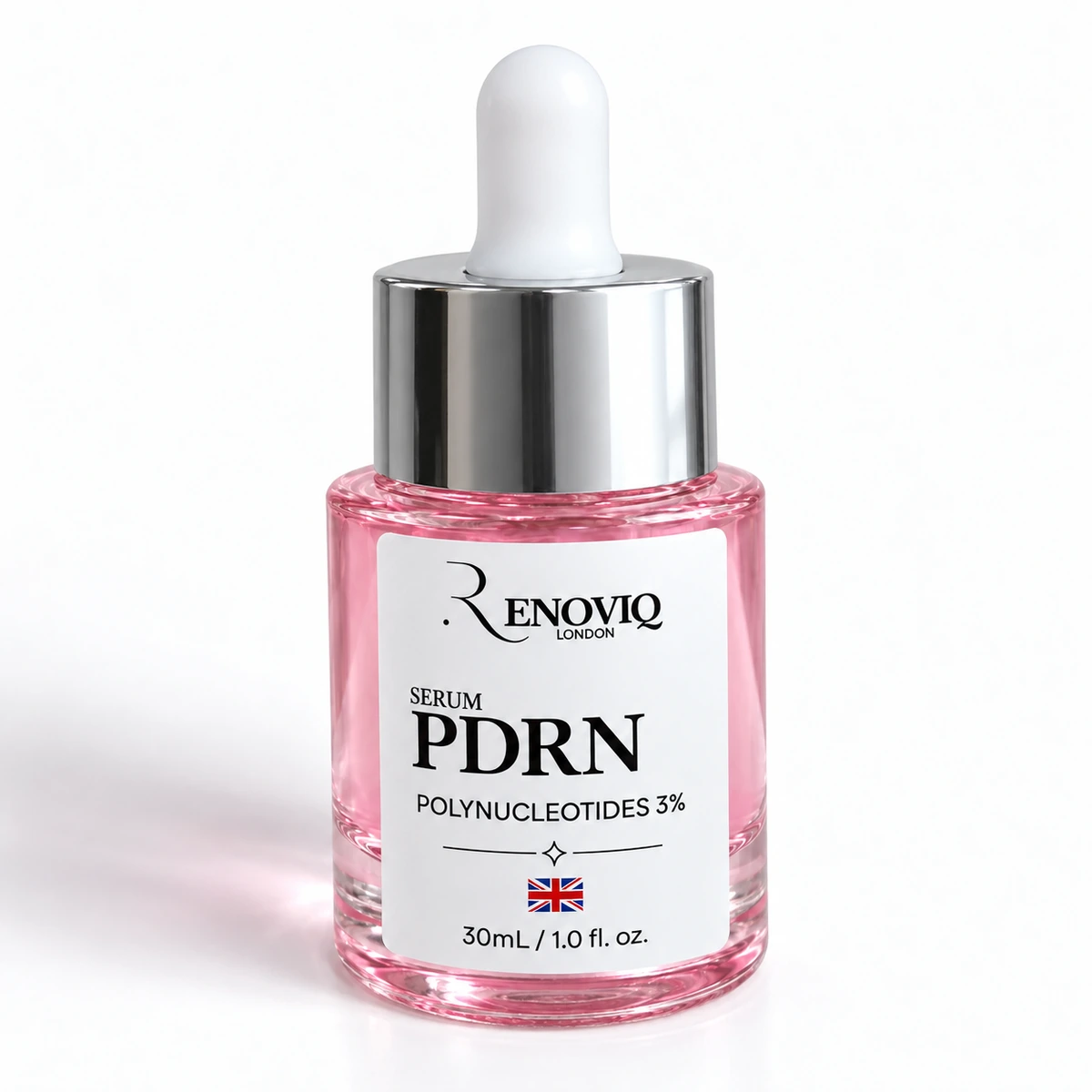
Renoviq London’s PDRN — Polynucleotide Repair Serum is a 30 ml serum containing 3% polynucleotides (PDRN). It is designed for AM/PM use and sits within the brand’s Repair axis. For someone interested specifically in the PDRN and A2A receptor discussion, it provides a straightforward single-active format centred on polynucleotides rather than a broad multi-active blend. That focus can make routine planning clearer, particularly when you want to identify the role assigned to each serum. Apply skincare in a way that feels practical for your routine, and introduce products carefully when your skin is already using other active formulas. The science of A2A receptors explains why polynucleotides attract attention in skincare; the day-to-day experience of a serum remains about its formula, texture, frequency of use and place within your own routine. Renoviq London positions this serum for use in both morning and evening routines.
FAQ
Does PDRN bind directly to the A2A receptor?
PDRN is generally explained through an indirect adenosine-related pathway. Polynucleotide fragments are broken down into smaller components, which contribute to the environment in which adenosine signalling takes place. Adenosine-related molecules then interact with receptors such as A2A. This distinction matters: PDRN is not best understood as a single molecule that directly presses the A2A receptor button.
What does A2A mean?
A2A is the name of one subtype of adenosine receptor. Adenosine receptors are cell-surface proteins that recognise adenosine-related signals. The A2A subtype is especially relevant in PDRN explanations because its activation is associated with intracellular signalling involving cyclic AMP, or cAMP. In simple terms, A2A identifies the particular message receiver being discussed, rather than a separate skincare ingredient.
Is A2A signalling the same as a cosmetic result?
No. A2A signalling describes a biological communication pathway, while a cosmetic result describes how skin looks or feels after using a finished product. Receptor activity alone does not define texture, formula compatibility, application routine or an individual’s visible experience. It is more accurate to view A2A as part of the scientific context behind PDRN than as a direct prediction of a specific cosmetic outcome.
How often can Renoviq London PDRN serum be used?
Renoviq London’s PDRN — Polynucleotide Repair Serum is designated for AM/PM use. The serum contains 3% polynucleotides (PDRN) and comes in a 30 ml size. When adding any new serum to a routine, introduce it thoughtfully and keep the rest of the routine consistent where possible. This gives you a clearer sense of how its application and finish fit with your usual skincare steps.