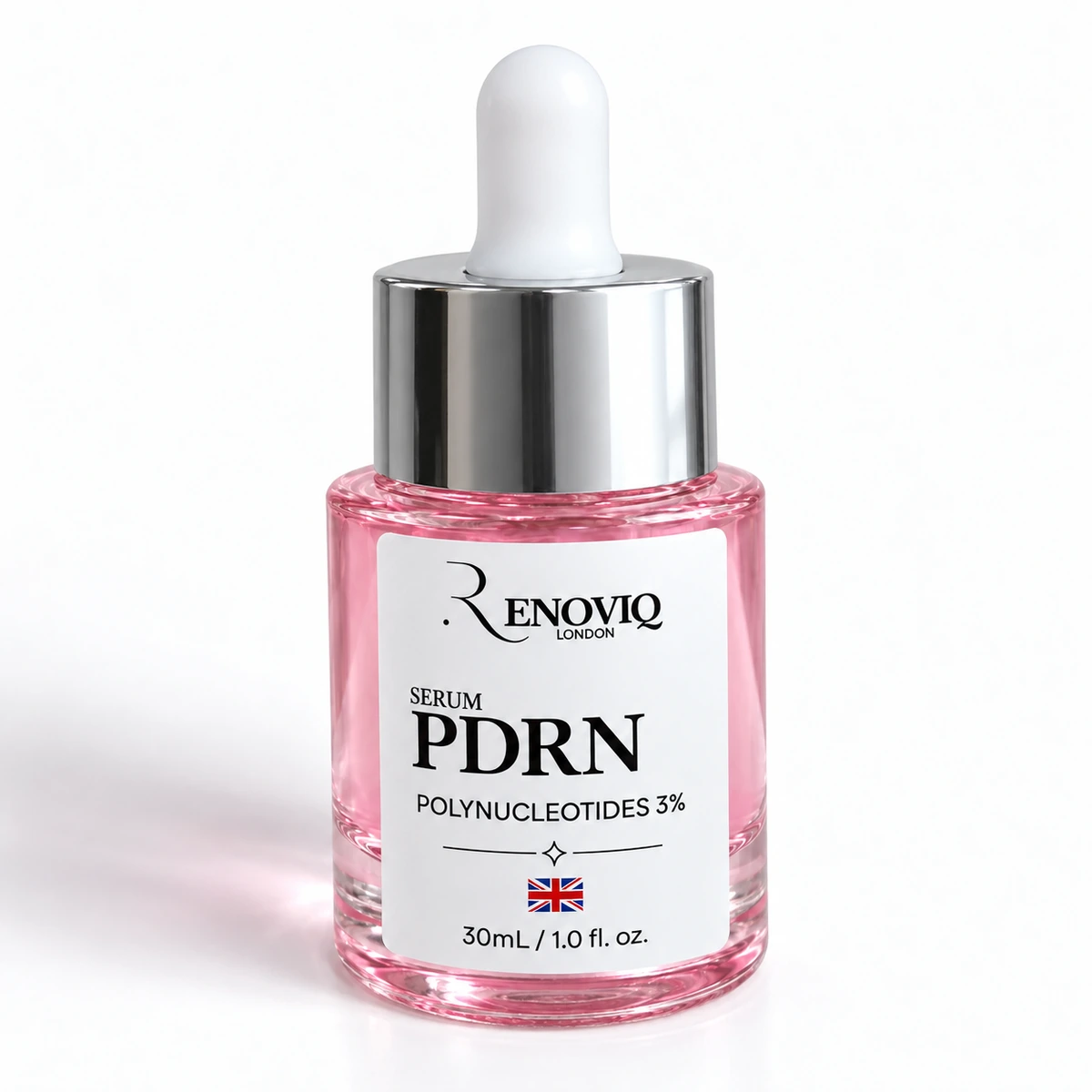
What Is PDRN? A Complete Guide to Polynucleotides in Skincare
PDRN stands for polydeoxyribonucleotide, a term used for polynucleotides: small DNA-derived fragments used in skincare formulas. In a topical routine, polynucleotides are chosen for a skin-supporting approach focused on a smoother-looking, more rested and more radiant-looking complexion. They are commonly used in serums and can fit alongside a simple moisturising and daily SPF routine. Renoviq London’s PDRN — Polynucleotide Repair Serum contains 3% polynucleotides and is designed for AM and PM use.
PDRN and polynucleotides: the essential definition
PDRN is short for polydeoxyribonucleotide. In skincare, it sits within the wider category of polynucleotides, which are chains or fragments associated with DNA. The terms are often used closely together because PDRN is a type of polynucleotide material. Rather than treating PDRN as a catch-all beauty buzzword, it is useful to look at the format, the stated active and where it belongs in a routine. Polynucleotide skincare is usually presented in a serum format, allowing the active to sit within a concise treatment step after cleansing. Its appeal is a considered, skin-focused routine that prioritises the appearance of comfort, smoothness and radiance. For readers comparing labels, PDRN identifies the polynucleotide active, while the full formula determines the product’s texture, layering experience and place in a daily regimen.
Why polynucleotides have become a skincare focus
Polynucleotides have become prominent in conversations about ingredient-led skincare because they offer a focused alternative to routines built around numerous overlapping actives. They suit the growing preference for clear product roles: one serum for a defined skincare axis, followed by moisturiser and daytime sun protection. This approach makes routines easier to assess and adjust. The value of a polynucleotide serum is not in expecting an overnight transformation. It is in consistent application and attention to the visible condition of the complexion over time. A well-organised routine can support skin that looks more polished and feels comfortably moisturised when paired with suitable basics. Keep expectations cosmetic and appearance-led: skincare can improve the look of dullness and dryness, but it is not a substitute for professional advice concerning a persistent skin concern.
Where PDRN fits in a daily skincare routine
A PDRN serum belongs after cleansing and before moisturiser. Apply it to clean skin, then follow with a moisturiser that suits your skin type. In the morning, finish with broad-spectrum SPF as the final skincare step before make-up. At night, retain the same simple sequence: cleanse, apply serum and moisturise. This order keeps the routine practical and gives each product a clear role. Renoviq London’s PDRN — Polynucleotide Repair Serum is a 30 ml serum containing 3% polynucleotides, with AM and PM use stated for the product. Introduce any new serum carefully, especially if your routine already includes several active products. Keeping the rest of the routine steady makes it easier to notice how the product feels on your skin and whether its finish works well beneath moisturiser, SPF or make-up.
How to combine polynucleotides with other skincare steps
Polynucleotides work best in a routine that avoids unnecessary complexity. Start with a gentle cleanser, use your PDRN serum, then apply moisturiser. During the day, add SPF. If you use more than one serum, establish a clear purpose for each one rather than layering products simply because they are available. Use thin, water-based textures before richer creams, and allow each layer to settle comfortably. Evening routines can be especially useful for a more considered serum step, but consistency matters more than an elaborate sequence. Pay attention to your skin’s visible response, including whether it looks balanced and feels comfortable. When trying a new combination, introduce one product at a time. This makes your routine easier to manage and avoids confusion about which product is responsible for the finish, feel or appearance you notice.
What to look for when choosing a PDRN serum
When choosing a PDRN serum, begin with straightforward information: the named active, its stated strength, product size, usage guidance and how it fits your existing routine. A clear product description helps you decide whether it is intended for morning use, evening use or both. Also consider texture and the products you already apply, particularly moisturiser, SPF and make-up. Renoviq London’s PDRN — Polynucleotide Repair Serum states 3% polynucleotides in a 30 ml format and is priced at £72. It is positioned within the brand’s Repair axis and is suitable for AM and PM use. These details make it simple to place within a routine. The most useful choice is one you can apply consistently, enjoy using and pair comfortably with the essential daily steps that already support a smooth, radiant-looking finish.
FAQ
Is PDRN the same as polynucleotides?
PDRN, or polydeoxyribonucleotide, is a type of polynucleotide material. Polynucleotides are the broader category, while PDRN is a more specific term often used on skincare product pages and ingredient discussions. In everyday skincare language, the terms are frequently discussed together. When comparing products, check the full label and product description for the active named, the stated strength, the recommended timing of use and the product format.
Can I use a PDRN serum in the morning and evening?
Follow the usage instructions for the individual product. Some PDRN serums are positioned for both morning and evening use, allowing them to sit after cleansing and before moisturiser. Renoviq London’s PDRN — Polynucleotide Repair Serum is stated for AM and PM use. In the morning, complete the routine with SPF. If you are introducing a new serum, keep the rest of your routine uncomplicated at first.
What should I use with a PDRN serum?
Use a PDRN serum within a simple routine: cleanser, serum, moisturiser and SPF in the daytime. This sequence gives the serum a clear place and helps maintain a comfortable finish. If you already use other targeted products, introduce the PDRN serum gradually and avoid adding several new products at once. Apply lighter textures before richer creams, and choose a moisturiser that leaves your skin feeling comfortable rather than overloaded.