How Long Does a PDRN Serum Take to Show a Difference?
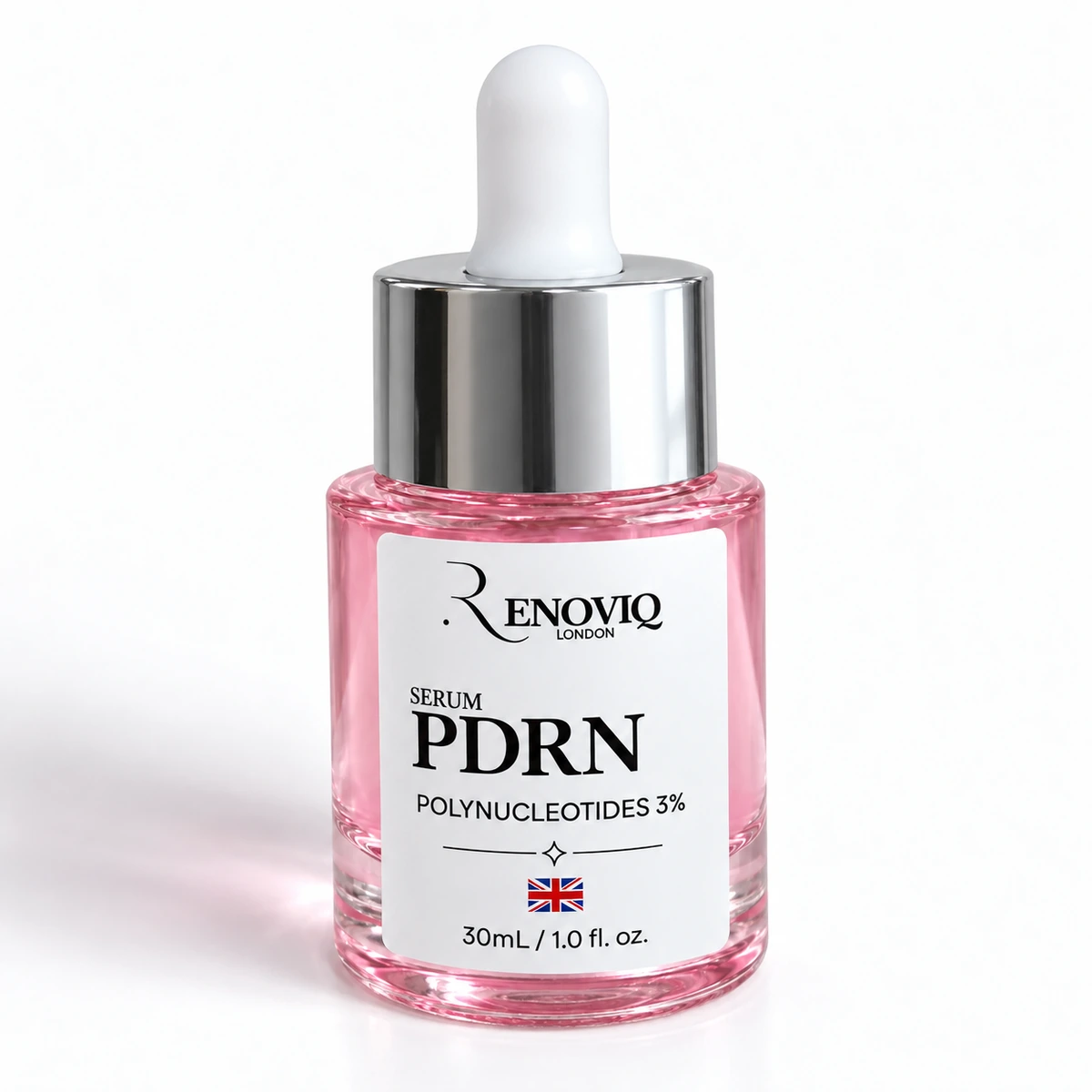
There is no fixed number of days in which every person will see a difference from a PDRN serum. Assess it through consistent use rather than a single application, and judge the look of your skin under the same lighting over time. Keep the rest of your routine stable, introduce only one new serum at a time and use photographs or notes to compare appearance. Renoviq London PDRN — Polynucleotide Repair Serum is designed for AM and PM use, making consistency straightforward.
Why there is no single PDRN serum timeline
A PDRN serum does not have one universal timetable for visible change. Skin appearance is influenced by the wider routine, cleansing habits, weather, makeup removal, product layering and how consistently a serum is used. Starting several new products together also makes it difficult to identify what has changed and why. The clearest approach is to set a baseline before beginning: take a photograph in daylight, note how the skin looks around areas of concern and repeat the comparison in the same conditions. Avoid judging progress from one close-up mirror check, as lighting and temporary surface changes can alter what you see. A regular routine provides a more useful basis for assessment than switching products frequently. The goal is a clear, repeatable view of whether the overall look of the complexion has changed over a period of consistent use.
Use consistency to assess the look of your skin
Consistency is the most practical way to evaluate any serum. Apply it at the same points in your routine, use an appropriate amount each time and avoid changing several variables at once. Renoviq London PDRN — Polynucleotide Repair Serum contains 3% polynucleotides and is specified for AM and PM use. Its 30 ml format supports a straightforward twice-daily placement within an established routine. In the morning, apply your serum steps in a consistent order before the rest of your daytime skincare. In the evening, repeat the same approach after cleansing. Keep notes on the date you begin and take comparison photographs weekly in the same room, at a similar time and without filters. This turns an unclear question into a practical record. It also prevents a good or bad skin day from becoming the sole basis for judging a product.
What to look for when comparing results
Focus on broad appearance rather than searching for a dramatic overnight change. Compare whether the complexion looks more even, whether the surface appears smoother or whether makeup sits differently across areas you monitor. Use the same facial expression, camera distance and lighting for each photograph, since shadows can emphasise texture or make the skin look different from one image to the next. It is also useful to write down changes in your routine, including new exfoliants, masks, seasonal shifts or travel. These details provide context when your skin’s appearance changes. Do not use a filtered selfie or a photograph taken in a new location as a comparison point. A simple weekly record gives more reliable information than daily scrutiny. If there is no clear difference in your own comparison images, that is useful information too: it shows that the routine should be reviewed rather than assumed to be working.
Keep the routine simple while you evaluate PDRN
A simple routine makes a PDRN serum easier to assess. Cleanse consistently, apply the serum as directed within your routine and avoid introducing multiple new products during the same evaluation period. New formulas can alter the look and feel of the skin, making it impossible to attribute a visible difference to one step. If you already use active evening products, retain a routine that your skin is accustomed to rather than adding several changes at once. Pay attention to product order as well: apply water-based serum steps to clean skin before richer creams, unless the individual product directions state otherwise. Daytime sun protection is also a standard final skincare step before makeup. A measured approach is not about chasing speed. It is about creating conditions in which you can judge the visible effect of your routine fairly, clearly and without confusing variables.
FAQ
Can I use a PDRN serum morning and night?
Check the directions for the specific formula. Renoviq London PDRN — Polynucleotide Repair Serum is specified for AM and PM use. Use it consistently within your existing routine and keep other changes to a minimum while assessing the look of your skin. This gives you a clearer comparison than alternating the product randomly or using it only occasionally.
How should I track whether a serum is making a visible difference?
Take baseline photographs before you begin, then repeat them weekly in the same daylight, location and camera position. Avoid filters, different makeup looks and close-up angles that exaggerate texture. Record any changes to your routine, climate or lifestyle at the same time. Compare the overall look of the complexion rather than relying on a single mirror check or one particularly good skin day.
Should I introduce other skincare products at the same time?
No. Introduce one new serum at a time when you want to assess it properly. Adding several products together prevents a clear evaluation because each formula, application change and routine adjustment can affect the appearance of the skin. Keep cleansing, moisturising and makeup habits as stable as possible, then use consistent photographs and notes to review the routine.
What is the Renoviq London PDRN serum?
Renoviq London PDRN — Polynucleotide Repair Serum is a 30 ml serum containing 3% polynucleotides, listed as Sodium DNA in its INCI. It is designed for AM and PM use and is priced at £72. Its formula also lists glycerin, panthenol, sodium hyaluronate, hydrolyzed sodium hyaluronate and allantoin.