Is 3% GHK-Cu Too Strong? A Clear Guide to Concentration Comparisons
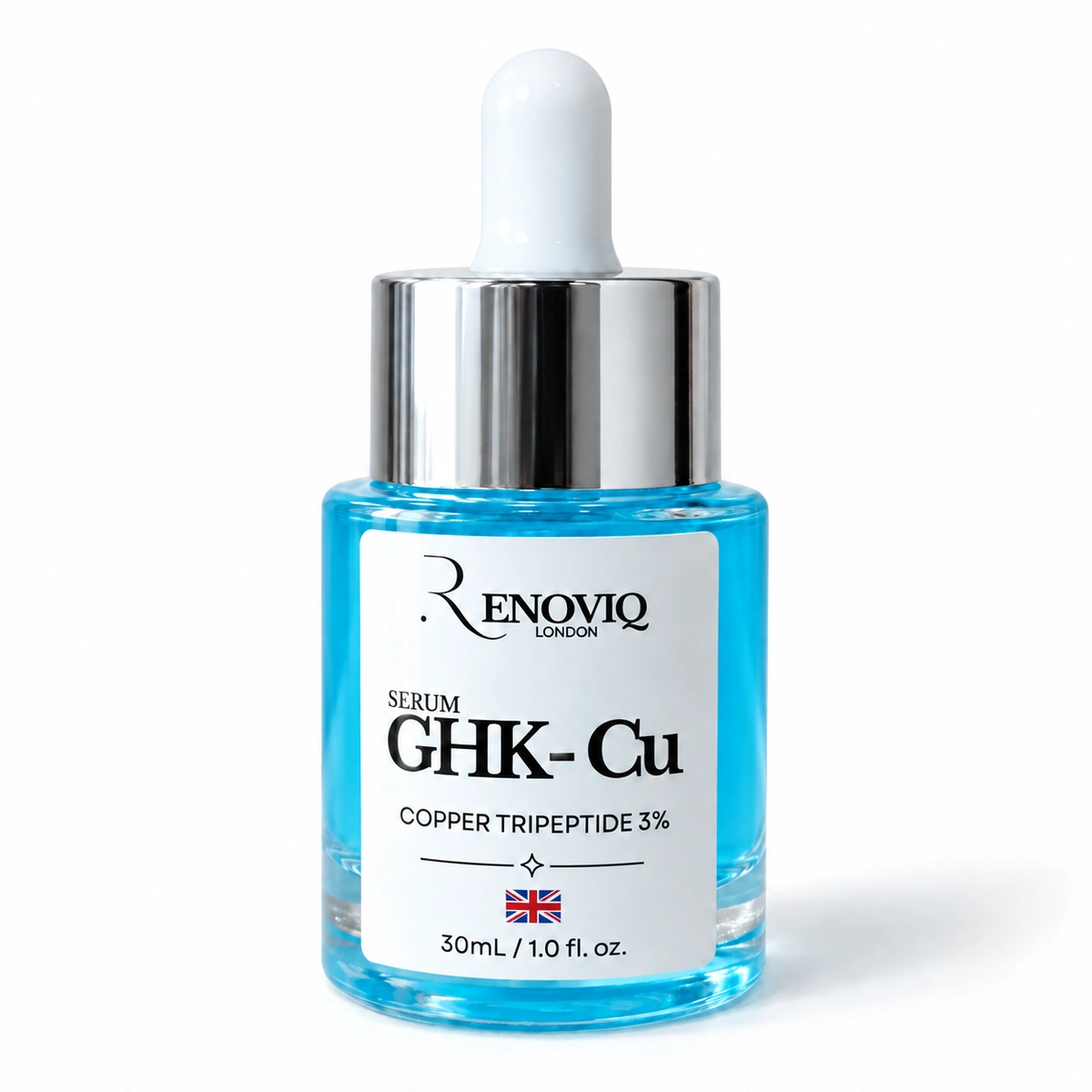
No, 3% GHK-Cu is not automatically too strong. Percentage alone does not define how a serum feels in a routine or whether it suits your skin. Concentrations can only be compared meaningfully when the active ingredient, formula format, application frequency and the rest of the routine are also similar. Renoviq London’s GHK-Cu — Copper Tripeptide Firming Serum contains 3% copper tripeptide-1 and is designed for PM use. Introduce any new active one product at a time and follow the product directions consistently.
What a 3% GHK-Cu concentration actually tells you
A 3% GHK-Cu label tells you the stated strength of copper tripeptide-1 in that particular serum. It does not, by itself, tell you everything about how the product fits into your skincare routine. Formula texture, the surrounding ingredients, how much product you apply and how often you use it all shape the experience. It is also important to compare like with like: a 3% GHK-Cu serum should be compared with another product that clearly identifies GHK-Cu, rather than with a different peptide or an unspecified peptide blend. Renoviq London’s GHK-Cu — Copper Tripeptide Firming Serum contains 3% copper tripeptide-1 in a 30 ml serum and is intended for PM use. The most useful question is not whether 3% sounds high in isolation, but whether the product works comfortably within a simple, well-managed evening routine.
Why concentration comparisons are not always straightforward
Skincare percentages can appear simple, yet they need context. A percentage refers to a specific named active, so it cannot create a direct ranking between GHK-Cu, retinaldehyde, polynucleotides or nicotinamide riboside. These are distinct ingredients with different product roles and use directions. A higher number does not automatically mean a stronger-looking result, a better serum or a more suitable choice for every routine. It simply describes the stated amount of that active in the formula. Clear comparison starts with four checks: identify the exact active, confirm its percentage, review whether the product is for AM or PM use, and consider the rest of your routine. This approach prevents misleading comparisons between products that share the word peptide but contain different ingredients. It also keeps attention on consistent use, product instructions and the appearance goal you want to prioritise.
How to introduce a 3% GHK-Cu serum thoughtfully
Introduce a 3% GHK-Cu serum in a controlled way rather than changing several products at once. Use the serum according to its stated PM direction and keep the rest of the evening routine familiar at first. This makes it easier to understand how the product feels on your skin and whether the routine remains comfortable. Apply a small amount as directed, avoid using more simply because the stated concentration is 3%, and maintain a consistent schedule. Patch testing a new cosmetic product before broader use is a practical starting step, particularly when you are building a routine around active-led serums. If your skin becomes uncomfortable, stop using the product and simplify your routine. GHK-Cu sits on Renoviq London’s firmness axis, making it a focused option for people who want a serum that supports skin that looks firmer and more polished in appearance.
Comparing GHK-Cu with other active serums
The best comparison is based on purpose and use timing, not percentage alone. Renoviq London lists GHK-Cu on its firmness axis and directs it for PM use. Its PDRN — Polynucleotide Repair Serum is listed for AM and PM use, while RETINAL — Overnight Renewal Serum is for PM use and NAD+ — Cellular Energy Serum is for AM use. These directions matter when planning a routine because they show that each serum has a different place within the brand’s active-led approach. Rather than treating every percentage as interchangeable, choose the product category that matches your priority and build from there. A 3% GHK-Cu serum is a direct choice for someone specifically seeking copper tripeptide-1 at that stated strength. It is not a numerical substitute for a 3% PDRN or 3% nicotinamide riboside serum, because the named actives and intended routine roles differ.
A practical way to decide whether 3% is right for you
Deciding whether 3% GHK-Cu suits your routine comes down to clarity, not fear of the number. First, confirm that GHK-Cu is the active you want to use. Second, choose a product with a transparent stated strength and clear application timing. Third, introduce it without adding several unfamiliar products at the same time. Finally, judge the routine by comfort, consistency and how your skin looks over time, rather than by expectations created by a percentage alone. Renoviq London’s 3% GHK-Cu serum is a PM product priced at £56 for 30 ml, so the format, use direction and strength are clearly stated. For a narrow GHK-Cu-focused routine, that clarity makes comparison easier. Keep your approach measured: use products as directed, avoid over-layering new actives at once, and give one routine change your full attention before making another.
FAQ
Is 3% GHK-Cu considered high?
A 3% GHK-Cu concentration is a clearly stated strength, but “high” is not a useful judgement without comparing the same named active in a similar product format. GHK-Cu should be compared with GHK-Cu, not with unrelated peptides or other skincare actives. Formula design, application frequency and the wider routine provide the context that a percentage alone cannot give.
Should I use more product because it contains 3% GHK-Cu?
No. Use the amount directed by the product instructions rather than increasing application because of the stated percentage. More product does not create a better routine. Start with a simple evening routine, introduce the serum without several other new products, and maintain a consistent approach. This gives you a clearer view of how the product feels and fits into your skincare habits.
Can I compare 3% GHK-Cu directly with 3% PDRN?
No. Both figures describe a percentage, but GHK-Cu and PDRN are different named actives with different product roles. A direct comparison should include the exact active, intended use time and the purpose of the serum. At Renoviq London, GHK-Cu is a PM firmness serum, while PDRN is listed for AM and PM use on the repair axis.
When should I use Renoviq London’s 3% GHK-Cu serum?
Renoviq London directs its GHK-Cu — Copper Tripeptide Firming Serum for PM use. Build it into an evening routine according to the product directions and keep other routine changes limited when first introducing it. The serum contains 3% copper tripeptide-1 and comes in a 30 ml format. A steady, uncomplicated routine gives you the clearest basis for assessing comfort and appearance.