Can Copper Peptides Cause Premature Ageing? What the Claim Actually Says
No. Copper peptides do not cause premature ageing. The claim usually confuses a temporary change in skin appearance, such as dryness, redness or a less smooth-looking surface, with long-term ageing. Those signs point to a routine that needs simplifying, not to copper peptides making skin look older. Use a copper peptide product as directed, introduce it within a consistent routine and judge it by how your skin looks and feels over time rather than by isolated day-to-day changes.
What the copper peptide claim actually means
The statement that copper peptides cause premature ageing is usually shorthand for a very different concern: skin can look temporarily less comfortable when a new active is added to an already busy routine. Dryness, visible redness, rough texture or a tight feeling can make the complexion appear less smooth and less radiant-looking. That is a routine-management issue, not evidence that copper peptides create premature ageing. A single difficult skin day also does not define a product’s place in a routine. Skin appearance changes with cleansing, weather, product layering, sleep and the amount of product used. The useful question is whether the routine remains comfortable and consistent. If it does not, remove unnecessary steps and focus on a simple application pattern. Assess the look of skin over several weeks of regular use, rather than interpreting a brief change in surface appearance as a lasting outcome.
Why temporary irritation can be mistaken for ageing
When skin feels dry or looks flushed, fine surface lines can look more noticeable and makeup can sit less evenly. This is why a temporary comfort issue is often described as ageing online, even though the two are not the same thing. The visual effect comes from the condition of the skin’s surface at that moment: a well-moisturised complexion generally appears smoother, while a dry one can look less even. Strong cleansing, frequent exfoliation and introducing several new products at once can all make it difficult to identify what is affecting the look of skin. Keep the rest of the routine steady when introducing a copper peptide serum. Avoid treating every visible change as proof of a dramatic long-term effect. A calmer routine gives a clearer view of whether skin feels comfortable, looks balanced and has the finish you want.
How to introduce a copper peptide serum sensibly
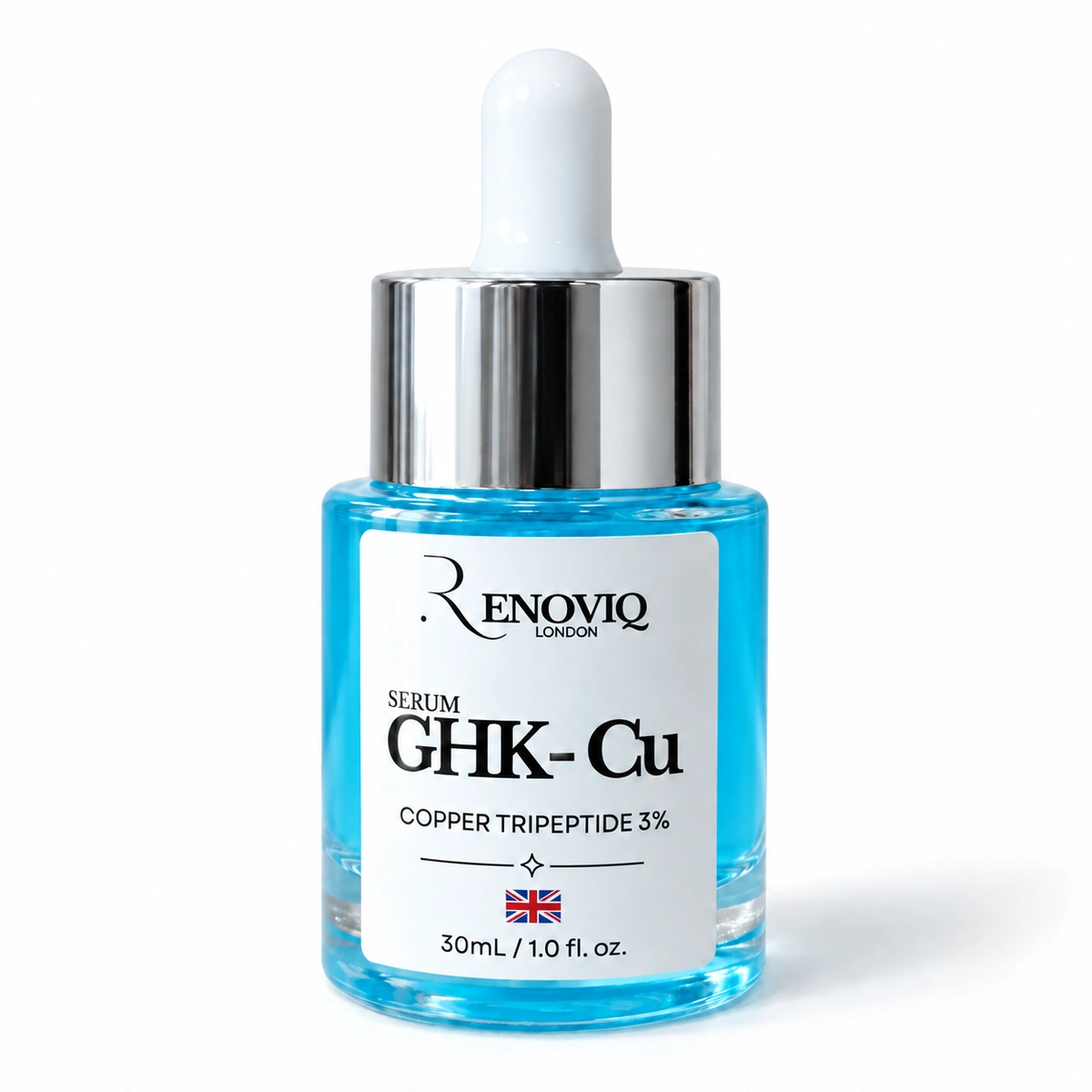
Start with one new product rather than changing an entire routine at once. Apply it to clean skin according to the product directions, then follow with the moisturising steps that already suit your skin. Keep application consistent and avoid piling on multiple strong active products simply because they are popular. This approach makes it easier to notice how your skin feels and how its surface appears. Renoviq London’s GHK-Cu — Copper Tripeptide Firming Serum contains 3% copper tripeptide-1, comes in a 30 ml format and is intended for PM use. Its product axis is firmness, so it belongs in an evening routine designed around the look of firmer skin rather than a crowded experiment with many new steps. If discomfort or persistent visible irritation develops, stop using the new product and return to a simple routine that feels comfortable.
Separating product expectations from skincare myths
Copper peptides are often discussed with dramatic language, which makes ordinary skincare decisions sound riskier than they are. The practical standard is simpler: a product should fit your routine, feel comfortable in use and support the appearance goal you have chosen. Copper peptides are not a reason to chase instant visual changes or to use more product than directed. More layers do not automatically create a more polished-looking result. A considered evening routine, gentle cleansing and a moisturiser that leaves skin feeling comfortable provide a sound context for any serum. It is also important to separate firmness language from claims about changing biological ageing. In cosmetic skincare, the relevant outcome is appearance: skin can look firmer, appear smoother and look more radiant. Clear expectations make it easier to avoid myths, monitor your routine calmly and make adjustments based on what you actually see.
FAQ
Do copper peptides make skin look older at first?
Copper peptides do not make skin prematurely age. A complexion can temporarily look less smooth when it is dry, visibly irritated or overwhelmed by too many routine changes. That appearance is often mistaken for ageing because surface lines and uneven texture can look more noticeable. Simplify the routine, introduce one product at a time and use moisturising steps that leave skin feeling comfortable. Judge results over consistent use rather than isolated changes from one day to the next.
Should copper peptides be used every evening?
Follow the directions for the individual product and keep the wider routine manageable. Renoviq London’s GHK-Cu — Copper Tripeptide Firming Serum is intended for PM use. Introduce it without adding several other new actives at the same time, so you can assess how your skin feels and looks. If your skin becomes persistently uncomfortable or visibly irritated, stop the new product and return to a simple routine.
What should I do if my skin looks dry after changing my routine?
Treat dryness as a sign to simplify the routine rather than as evidence of premature ageing. Pause recent additions, use a gentle cleansing approach and prioritise moisturising products that leave skin feeling comfortable. Avoid adding more active products in an effort to correct the look immediately. Once the skin surface appears calmer and more even, reintroduce only one product at a time. This makes it easier to identify what suits your routine.